AI Algorithms Transforming Live Odds for Niche UK Football Markets
Data Streams Fuel Machine Learning Models
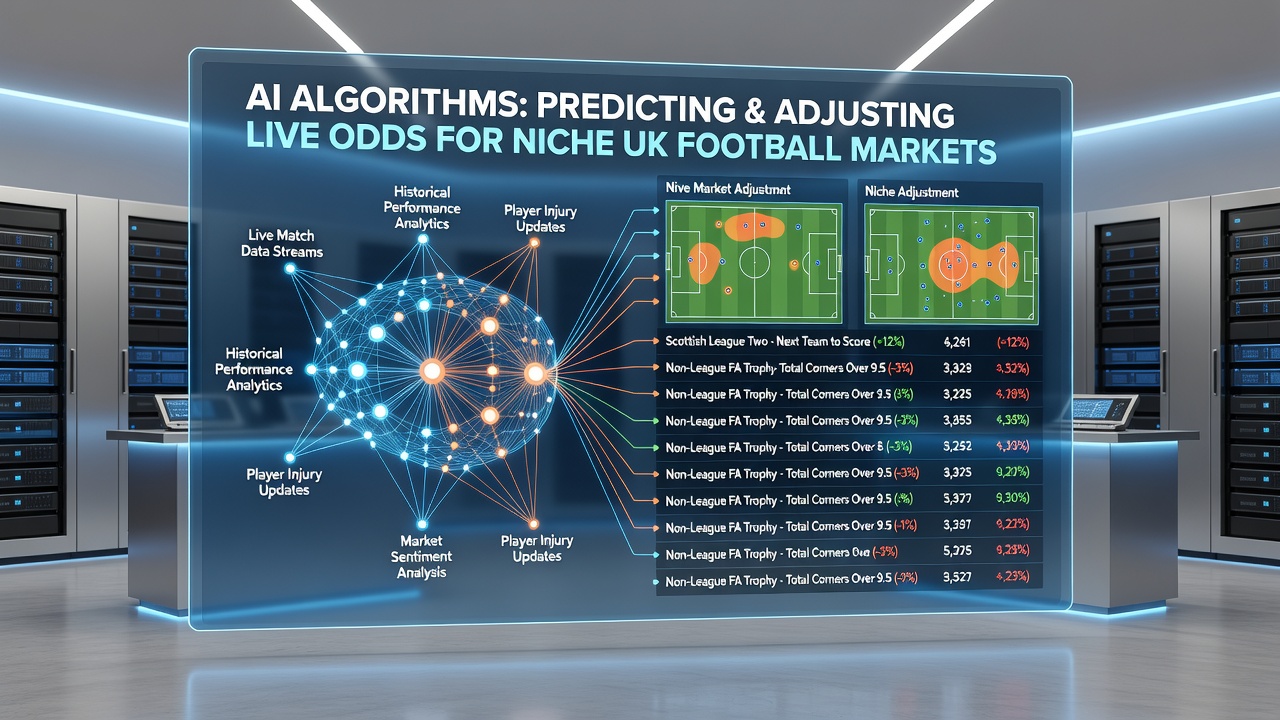
Operators deploy AI systems that ingest real-time inputs from player tracking sensors, historical match databases, and external factors such as pitch conditions or travel schedules, and these models continuously recalibrate probabilities for markets like first-half corners in League Two fixtures or shots on target by specific midfielders in National League games. Data shows that such systems process thousands of variables per second, allowing platforms to update odds within milliseconds of on-field events while maintaining margins across thousands of simultaneous bets.
Core Prediction Techniques
Gradient boosting frameworks combined with recurrent neural networks identify subtle patterns in possession metrics and set-piece frequencies that traditional statistical methods often overlook, and researchers at institutions like the University of Sydney have documented how these layered approaches improve forecast accuracy for low-volume events by integrating video-derived event data with betting flow indicators. The models assign weighted values to variables such as referee tendencies or weather impacts, then generate baseline odds that feed into live adjustment engines.
Real-Time Adjustment Mechanisms
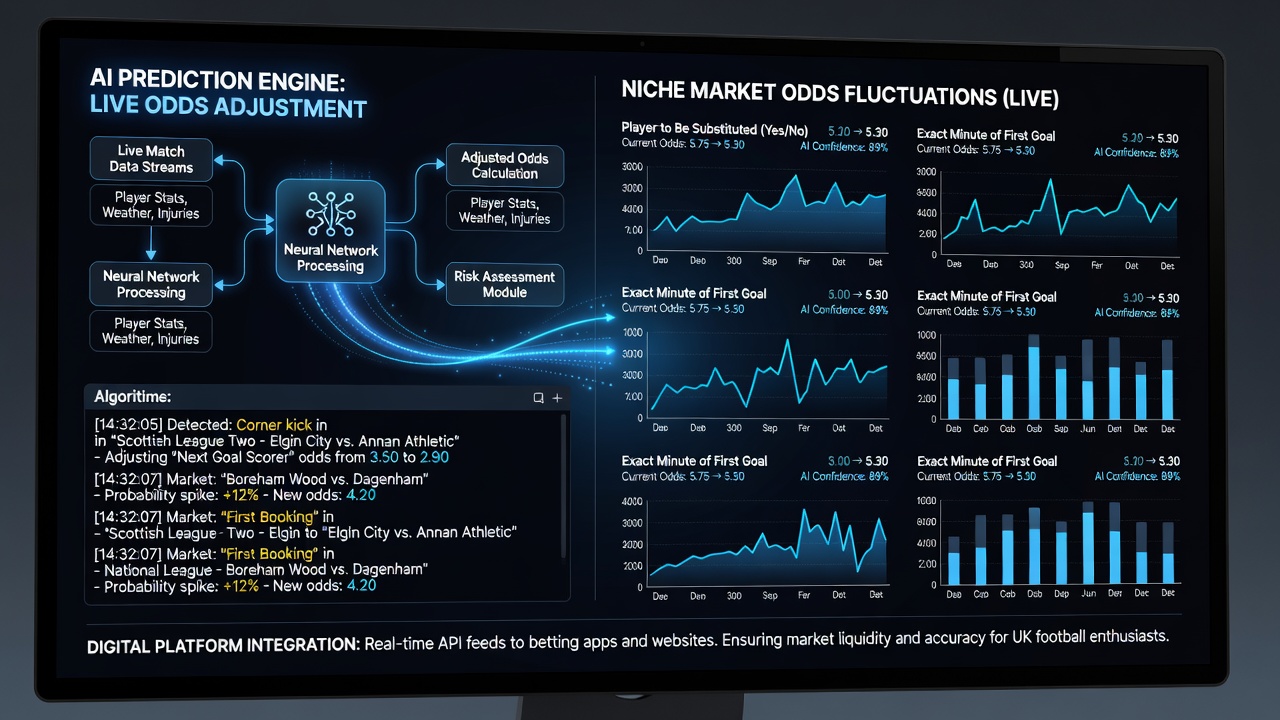
When a match begins, reinforcement learning agents monitor incoming data feeds and shift odds automatically in response to early developments such as an unexpected substitution or a change in formation, and this process relies on predefined risk thresholds that prevent excessive exposure on any single outcome. Industry reports indicate that platforms handling niche UK football markets use ensemble methods where multiple algorithms vote on probability shifts, resulting in smoother price movements that reflect both statistical likelihood and liquidity constraints.
Operators integrate these adjustments with customer segmentation tools that detect unusual betting patterns, allowing the system to widen spreads on certain prop bets if volume spikes unexpectedly. As of June 2026, several major digital platforms reported that AI-driven updates now account for over 85 percent of all odds changes in lower-league and specialized football markets, reducing manual intervention while meeting operational compliance standards set by various international gaming associations.
Handling Low-Liquidity Markets
Niche offerings such as exact goal times or player card counts present thinner betting volumes, and AI systems address this by borrowing strength from correlated high-volume markets like total goals or match winner. Bayesian updating techniques allow models to refine estimates as new information arrives, preventing drastic swings that could erode trust among users who place smaller wagers on these specialized lines. Observers note that this approach has enabled operators to expand their market depth without proportionally increasing risk reserves.
External data sources including GPS tracking from wearable devices and optical character recognition applied to broadcast feeds supply granular inputs that improve model robustness, and a 2025 analysis by Canadian gaming research groups highlighted how such integrations reduced pricing errors in comparable soccer markets by measurable margins. Platforms further calibrate these models against historical payout data to ensure long-term balance across thousands of niche events each season.
Regulatory and Technical Safeguards
Systems incorporate audit trails that log every odds change along with the contributing data points, and this documentation supports oversight by bodies outside the UK such as the Australian Communications and Media Authority when cross-border operators seek licensing. Security protocols encrypt model parameters while permitting regulators to review decision logic upon request, and developers continue to refine anomaly detection modules that flag potential manipulation attempts before they influence live prices.
Technical teams test algorithms extensively against simulated match scenarios drawn from past seasons, verifying that adjustments remain within acceptable deviation bands even during high-volatility periods such as stoppage time. These validation exercises draw on datasets maintained by European sports analytics consortia, ensuring consistency across different leagues and competition formats.
Future Integration Trends
Developers explore multi-agent frameworks where separate AI components specialize in distinct market categories before coordinating final outputs, and early deployments suggest this modular structure could further accelerate response times for corner or booking markets. Integration with augmented reality overlays on mobile apps may soon allow users to view probability heat maps derived directly from the same underlying models.
Conclusion
AI-driven prediction and adjustment systems have become central to the operation of niche UK football betting markets on digital platforms, processing diverse data streams to maintain accurate live odds while managing risk across low-volume propositions. Continued advances in model architecture and data integration point toward even more responsive pricing mechanisms in the seasons ahead, supported by evolving technical and oversight frameworks from multiple international sources.